
Youth Protests & Minister Resignation | UPSCPDF
UPSCPDF Editorial Analysis: NEET-UG 2026 paper-leak row, the CJP youth movement, Education Minister
Key Takeaways | Quick Facts Box | How the Crisis Unfolded | Constitutional & Legal Touchpoints | Comparative Snapshot | The Examination-Integrity Architecture | Enabling & Oversight Measures | Global & SDG Frame | Marks Breakdown | More Mains Angles (Multi-GS) | Additional Essay Angles | Key Actors & Stakeholders | Quick Revision Tags | 📚 Explore More UPSC Editorial Analyses | 🇮🇳 UPSCPDF Editorial Analysis
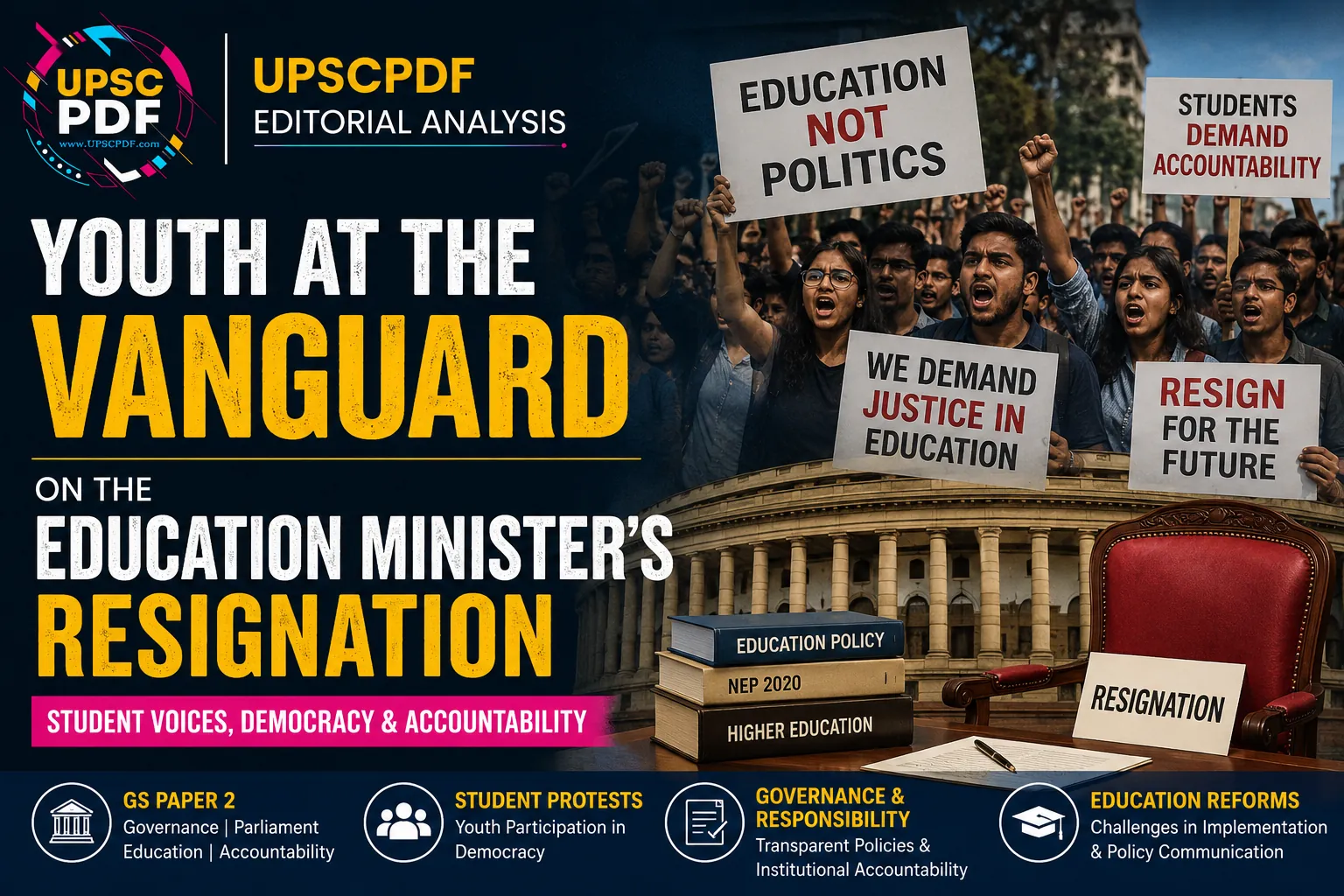
The NEET-UG 2026 paper-leak crisis, the youth-led Cockroach Janta Party movement and the Education Minister's exit — decoding accountability, the right to protest and examination reform through a balanced, constitution-first lens. On 25 July 2026, Union Education Minister Dharmendra Pradhan resigned from the Council of Ministers, saying he was stepping down "in the larger interest of students" and taking moral responsibility for the NEET-UG 2026 controversy. His exit followed a weeks-long, largely youth-led agitation centred on Delhi's Jantar Mantar. The undergraduate medical entrance test, held on 3 May 2026, was cancelled by the National Testing Agency (NTA) on 12 May after inputs on an alleged large-scale leak. A CBI probe was ordered and a re-test (Re-NEET) was conducted on 21 June 2026, with results declared on 16 July. Over 22 lakh candidates were affected, making it one of the largest exam disruptions in recent memory. The episode sits squarely in GS-2: it engages examination
⏱ Reading time: ~29 min