

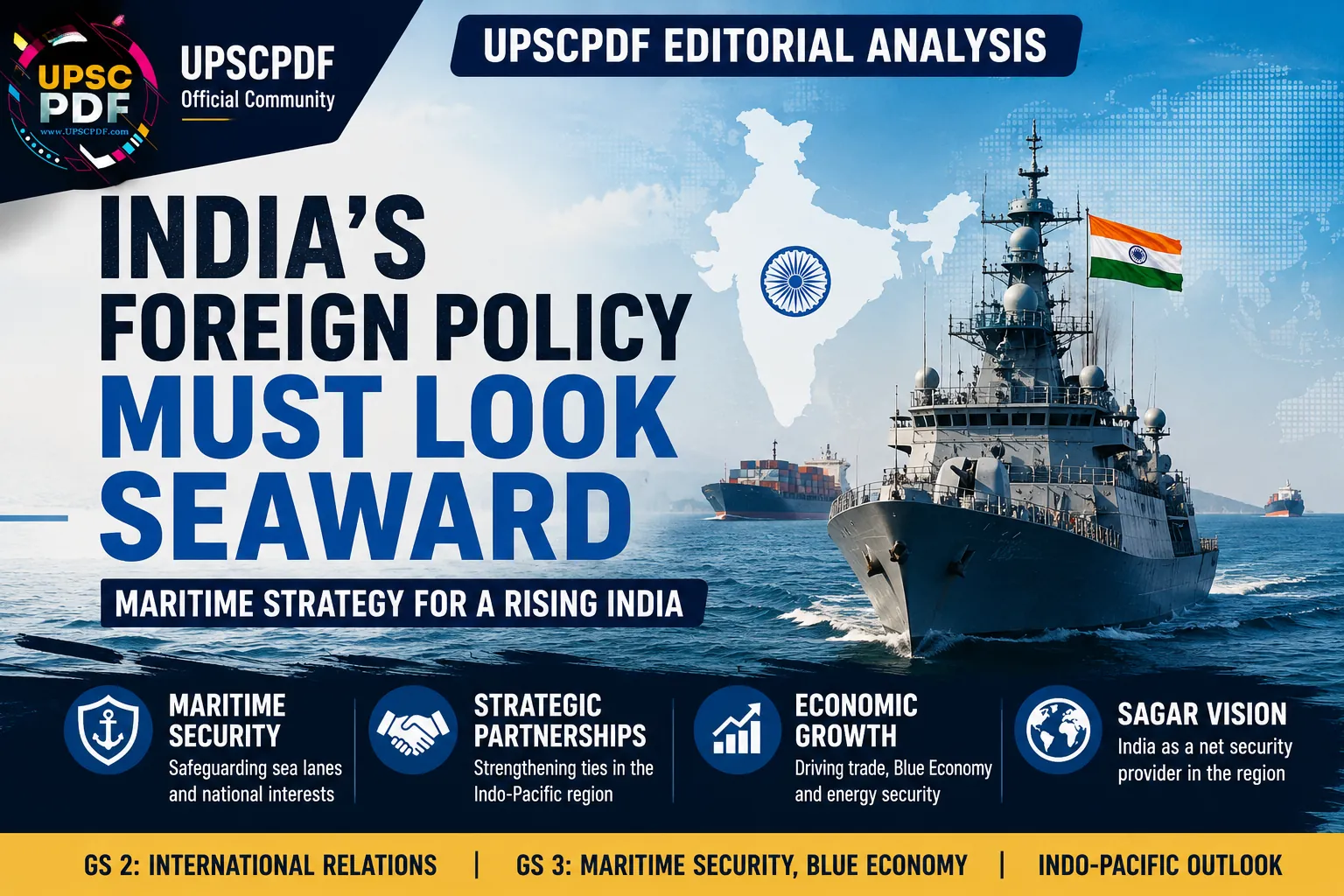
Seaward Foreign Policy & Seafarers | UPSCPDF
UPSCPDF Editorial Analysis: India must protect 3.2 lakh seafarers beyond borders, flags & jurisdictions. UPSC GS-2 guide — MCQs, Mains, Essay, Interview.
Key Takeaways | Quick Facts Box | Evolution of India's Maritime-Labour Framework | The Core Problem — Two Sides | Constitutional & Legal Foundations | Comparative Best Practices | Government Response & Legal Architecture | The International Frame | The Way Forward (10-Point Agenda) | Marks Breakdown | More Mains Angles (Multi-GS) | Additional Essay Angles | Key Actors & Stakeholders | Quick Revision Tags | 📚 Explore More UPSC Editorial Analyses
At sea, nationality is usually clear; responsibility seldom is. Protecting 3.2 lakh Indian seafarers beyond borders, flags and jurisdictions — from West Asia to the Black Sea — is now a defining test of India's maritime foreign policy. A recent editorial by Syed Akbaruddin — a former Permanent Representative of India to the UN — argues that India's foreign policy must "look seaward" and protect its seafarers beyond borders, flags and jurisdictions. Of the 14 Indians killed in attacks connected to the West Asia conflict since February 28, 2026, at least eight were seafarers aboard commercial ships. The trigger is a cluster of protective measures: on July 15, 2026, the government told shipowners, managers and recruitment agencies to avoid deploying Indian seafarers on vessels transiting the Strait of Hormuz until further orders, and announced a "Seafarer First" response — a dashboard to track ships, threats and crew welfare, with a liaison officer for each affected family. This
⏱ Reading time: ~31 min