

Jantar Mantar Force Case & Protest Rights | UPSCPDF
UPSCPDF Editorial Analysis: use of force at Jantar Mantar, protest rights, proportionality & police accountability. UPSC GS-2 guide with MCQs, Mains & Essay.
Key Takeaways | Quick Facts Box | How the Episode Unfolded & Its Legal Lineage | The Two Sides of the Debate | Constitutional & Legal Foundations | Accountability Frameworks & Institutional Tools | Comparative Best Practices | Marks Breakdown | More Mains Angles (Multi-GS) | Additional Essay Angles | Key Actors & Stakeholders | Quick Revision Tags | 📚 Explore More UPSC Editorial Analyses | 🇮🇳 UPSCPDF Editorial Analysis
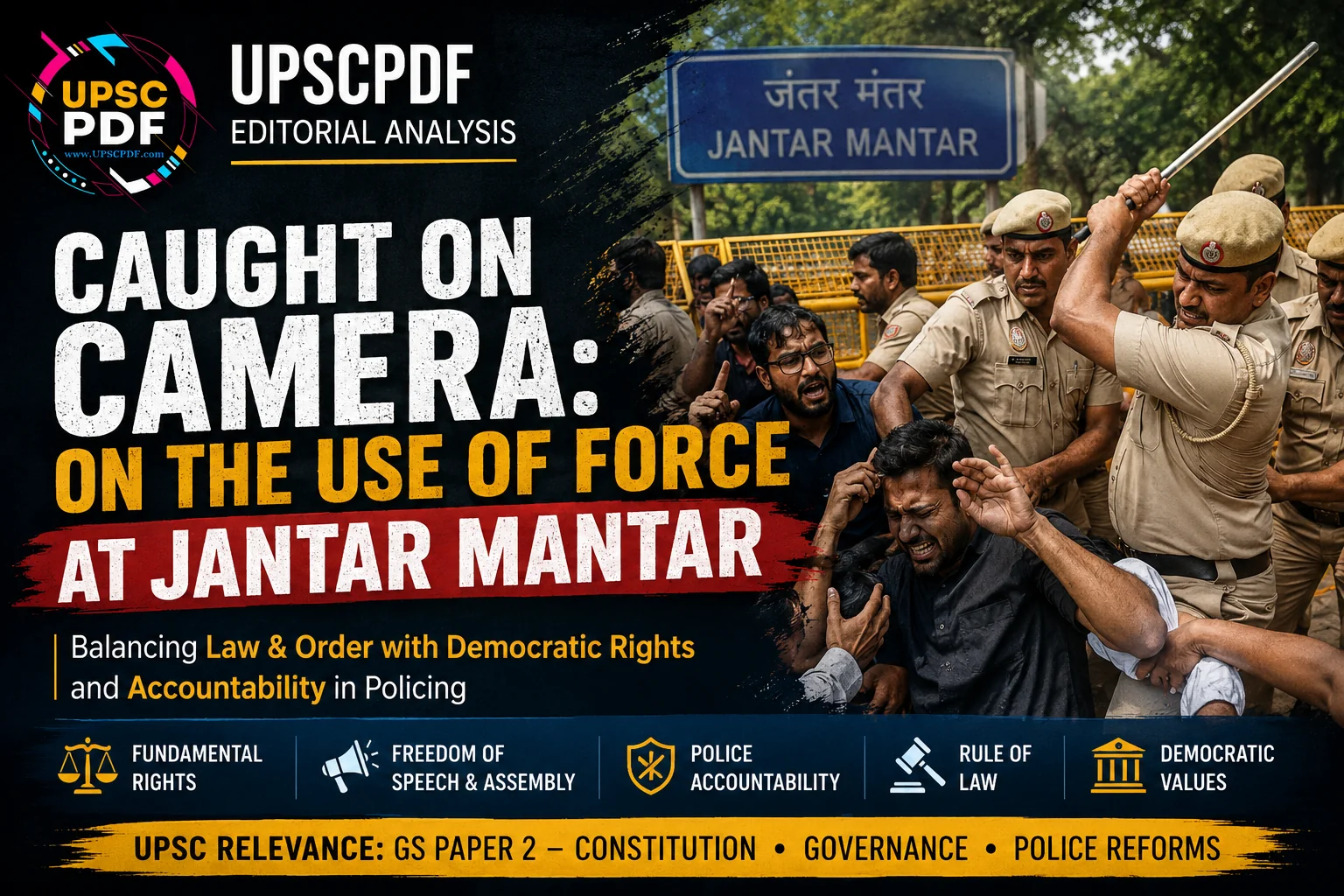
Public order versus civil liberty — analysing the proportionality of state force, police accountability, the role of digital evidence, and the constitutional right to peaceful assembly in a democracy. In July 2026, an editorial commentary examined alleged excessive force by Delhi Police and unidentified plain-clothes persons against student protesters at Jantar Mantar, New Delhi. The demonstration was reportedly linked to grievances over examination paper leaks and irregularities, and the aftermath saw circulating video clips, medical reports and petitions before the courts. The central question is whether the police response was lawful, necessary and proportionate, or whether it crossed into arbitrary force — including alleged assault on women and minors. The Supreme Court's willingness to hear the complaints, following reported Delhi High Court directions to preserve CCTV and related footage, gives the episode institutional weight beyond a single protest. The debate sits squarely
⏱ Reading time: ~28 min