
Qdenga Dengue Vaccine 2026 | UPSC GS-2 | UPSCPDF
UPSCPDF Editorial Analysis: India approves Qdenga, its first dengue vaccine — serotype efficacy, affordability, regulation and equity. UPSC GS-2 guide with MCQs, Mains, Essay & Interview.
Key Takeaways | Quick Facts Box | The Road to a Dengue Vaccine | The Science — Why Dengue Is Hard | Efficacy — Read It Carefully | Constitutional & Legal Anchors | The Regulatory & Delivery Architecture | The International & Comparative Frame | Marks Breakdown | More Mains Angles (Multi-GS) | Additional Essay Angles | Key Actors & Stakeholders | Quick Revision Tags | 📚 Explore More UPSC Editorial Analyses | 🇮🇳 UPSCPDF Editorial Analysis
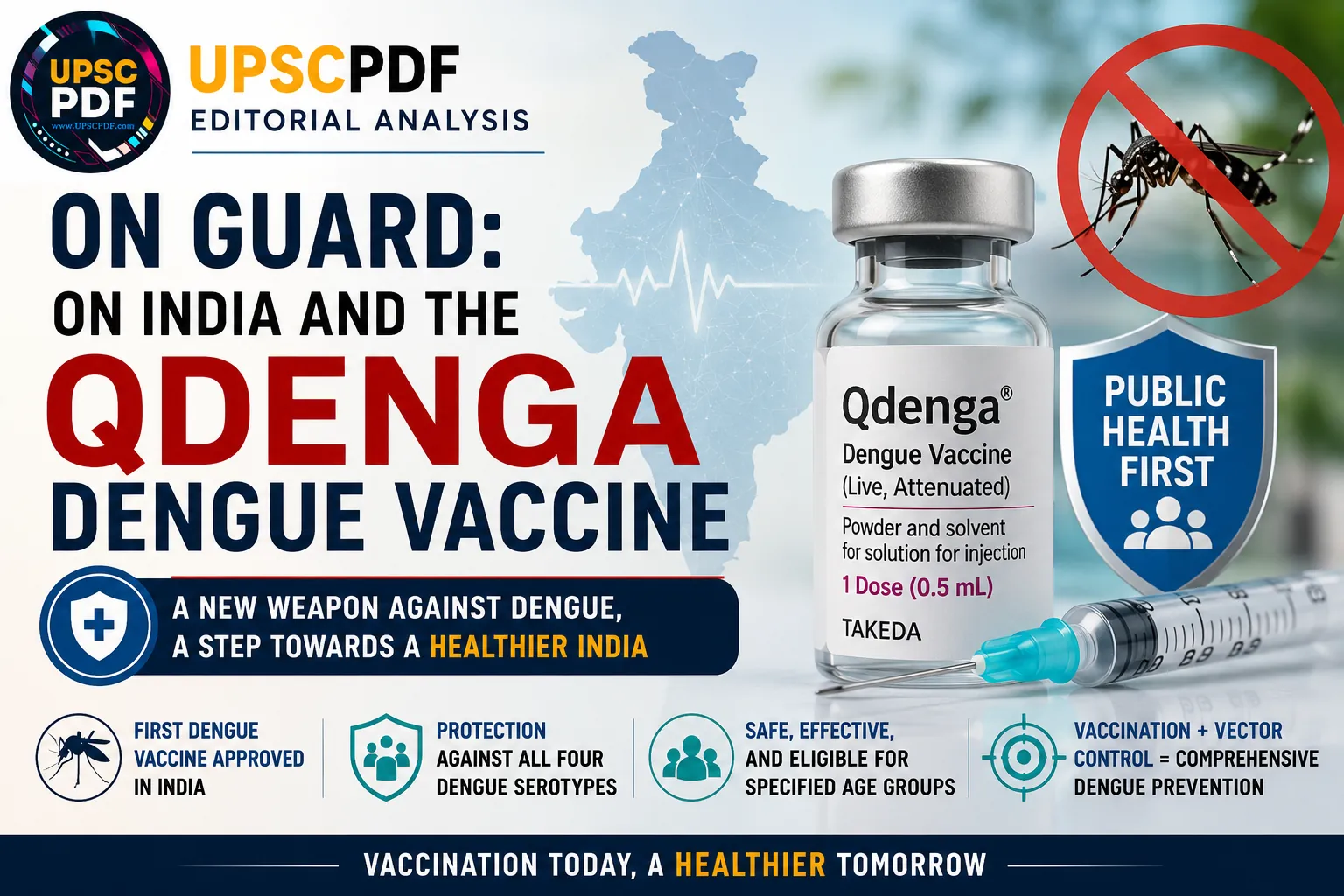
India clears its first-ever dengue vaccine — but serotype gaps, a two-dose schedule and pricing decide whether it protects those most at risk. Analysing the science, the regulation and the equity of the rollout. In July 2026, the Central Drugs Standard Control Organisation (CDSCO), under the Union Health Ministry, granted marketing authorisation to Qdenga (TAK-003) — India's first-ever approved dengue vaccine. A live-attenuated tetravalent vaccine developed by Takeda, it is cleared for individuals aged 4 to 60 years as a two-dose schedule three months apart, and does not require pre-vaccination screening for prior dengue infection. The approval follows the vaccine's licensing in more than 40 countries and WHO prequalification (2024), and arrives amid some of India's heaviest dengue years — driven partly by better surveillance and by Aedes mosquitoes spreading into semi-urban and rural districts where vector control is hard to sustain. The public debate has shifted from scientific
⏱ Reading time: ~28 min