

China Policy & Strategic Autonomy | UPSC GS-2 | UPSCPDF
UPSCPDF Editorial Analysis: India
Key Takeaways | Quick Facts Box | Evolution of the India–China Strategic Contest | Constitutional & Legal Foundations of External Policy | Anatomy of the Debate | India's Policy Toolkit for Strategic Resilience | Comparative Best Practices | Marks Breakdown | More Mains Angles (Multi-GS) | Additional Essay Angles | Key Actors & Stakeholders | Quick Revision Tags | 📚 Explore More UPSC Editorial Analyses | 🇮🇳 UPSCPDF Editorial Analysis
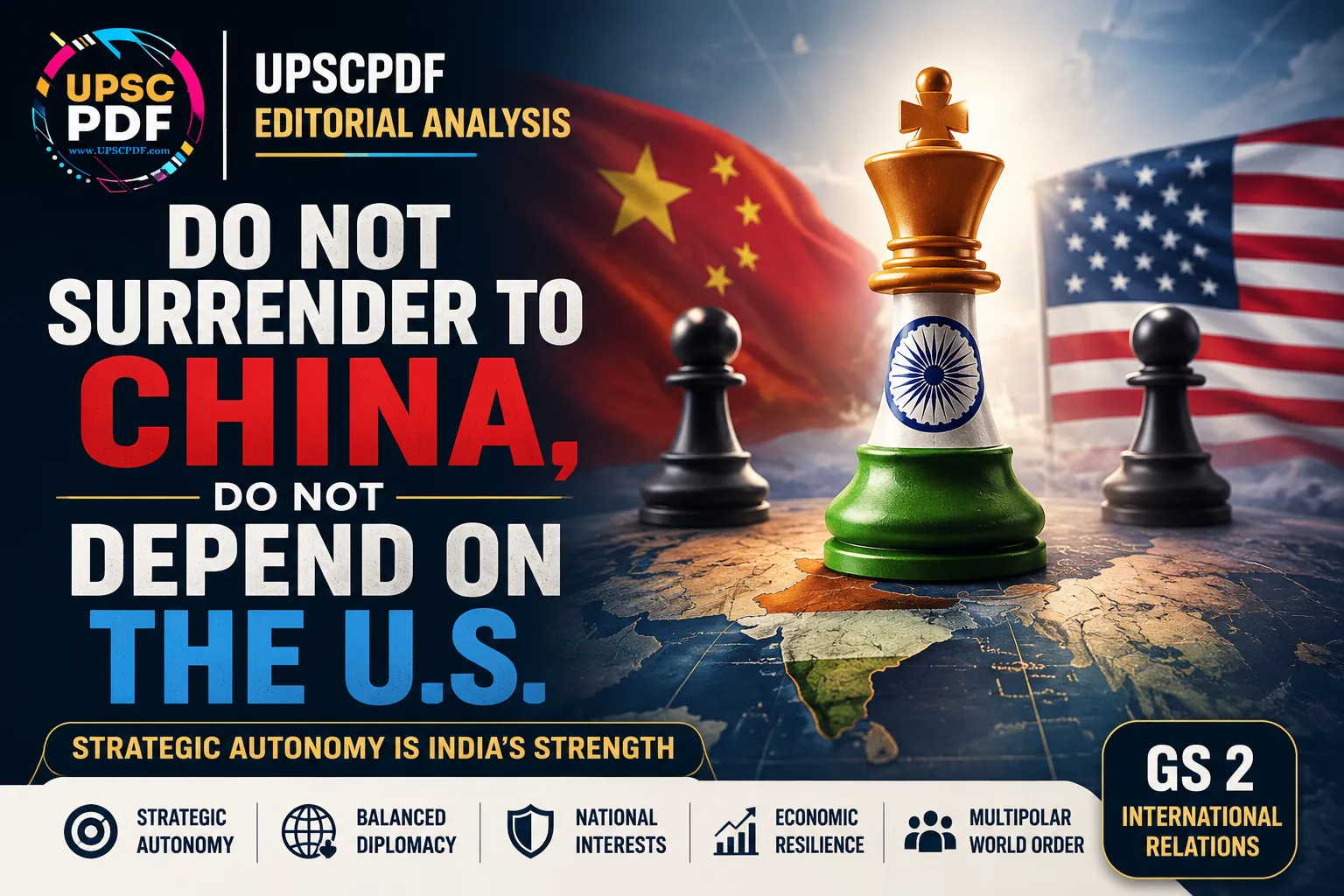
Realising that Washington is an unreliable partner does not mean New Delhi must run into the arms of an actively hostile neighbour — decoding India's search for strategic autonomy, supply-chain resilience and the strength to "walk straight." A volatile policy climate in Washington — punitive tariffs on Indian steel and aluminium, the withdrawal of preferential trade status, tighter H-1B visa rules, and renewed U.S. outreach to Islamabad — has triggered a wave of strategic anxiety in New Delhi. A growing chorus of domestic voices, led by an influential business lobby, is calling for a fundamental reset of India's China policy back toward the pre-2020 status quo. A widely discussed editorial critique argues the opposite: that a hasty, unreciprocated economic embrace of Beijing is a dangerous prescription. It cautions that easing India's post-Galwan restrictions would mistake short-term commercial convenience for long-term national security — deepening an asymmetric dependency and
⏱ Reading time: ~29 min