

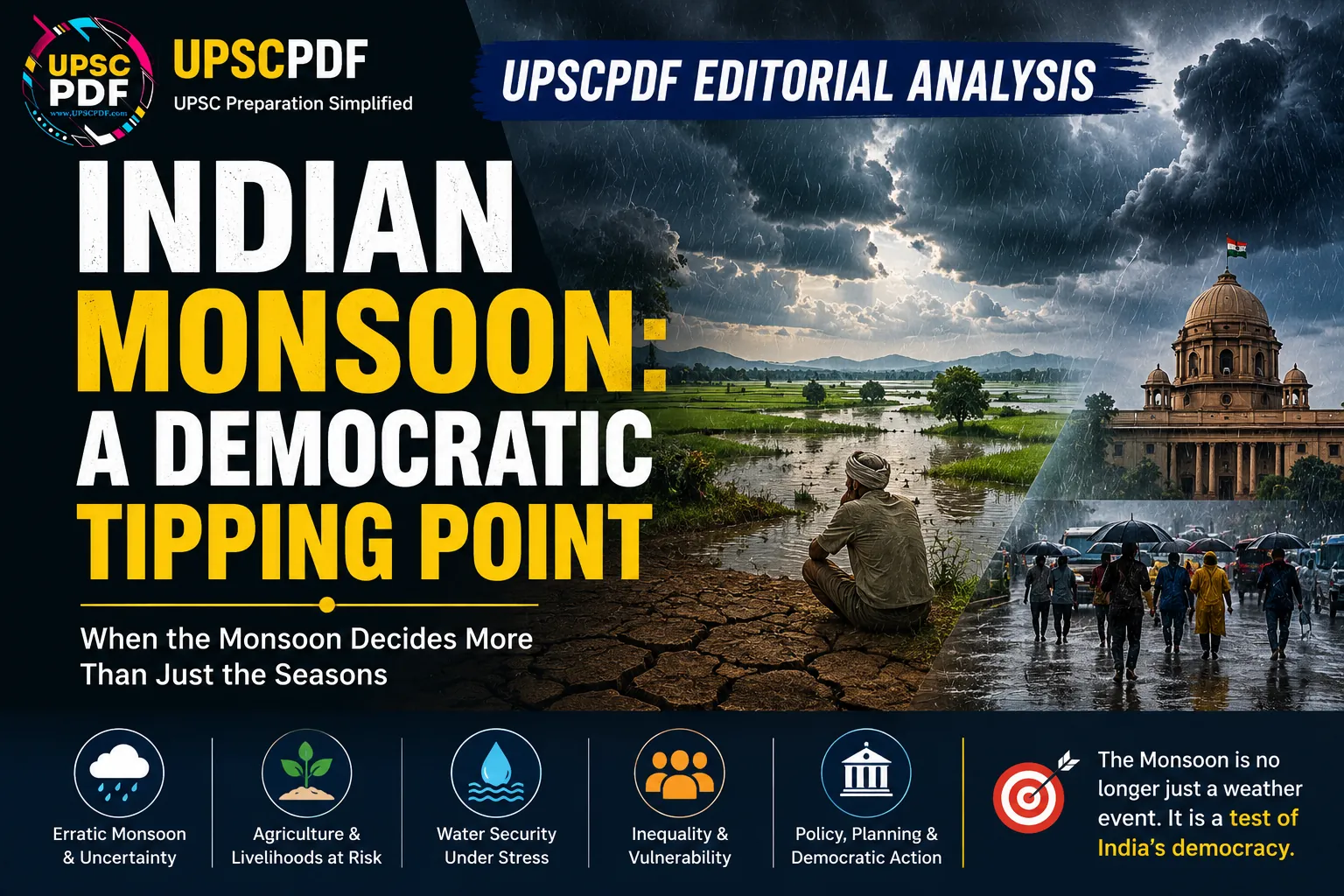
Indian Monsoon: Democratic Tipping Point | UPSCPDF
UPSCPDF Editorial Analysis: the
Key Takeaways | Quick Facts Box | A Constitutional & Democratic Timeline | Core Analysis of the Argument | Constitutional Foundations | Government Schemes, Policies & Laws | The International Frame | Committees Worth Citing | Marks Breakdown | Key Dimensions (Multi-GS Angles) | Additional Essay Angles | Key Actors & Stakeholders | Quick Revision Tags | 📚 Explore More UPSC Editorial Analyses | 🇮🇳 UPSCPDF Editorial Analysis
Citizen mobilisation, constitutional values and the AI age — decoding an editorial that reads India's convergence of student protests, civil-society voice and parliamentary accountability as a "democratic monsoon," a season of renewal on the road to India@2047. An op-ed by telecom pioneer and development thinker Sam Pitroda argues that India stands at "an important moment in its democratic journey." It reads three concurrent developments together — large student demonstrations demanding fairness in competitive examinations, Sonam Wangchuk's prolonged fast (spotlighting Ladakh's ecology, Sixth-Schedule and statehood demands), and the Monsoon Session of Parliament — as signals of a rising citizen desire to be heard, to participate and to shape India's democratic future. Pitroda names this moment the "Indian Monsoon." Just as the annual rains follow months of intense heat, he writes, societies too experience seasons when accumulated aspirations, frustrations and exclusion seek peace
⏱ Reading time: ~29 min