
Iran Conundrum & Hormuz | UPSC GS-2 | UPSCPDF
UPSCPDF Editorial Analysis: the 2026 US–Iran framework, Strait of Hormuz, IAEA verification, energy security & multipolarity. GS-2 guide with MCQs, Mains, Essay & Interview.
Key Takeaways | Quick Facts Box | The Road to the 2026 Framework | Concepts That Anchor This Debate | Constitutional & Legal Foundations | The Frameworks, Instruments & Institutions | The International Frame | Marks Breakdown | More Mains Angles (Multi-GS) | Additional Essay Angles | Key Actors & Stakeholders | Quick Revision Tags | 📚 Explore More UPSC Editorial Analyses | 🇮🇳 UPSCPDF Editorial Analysis
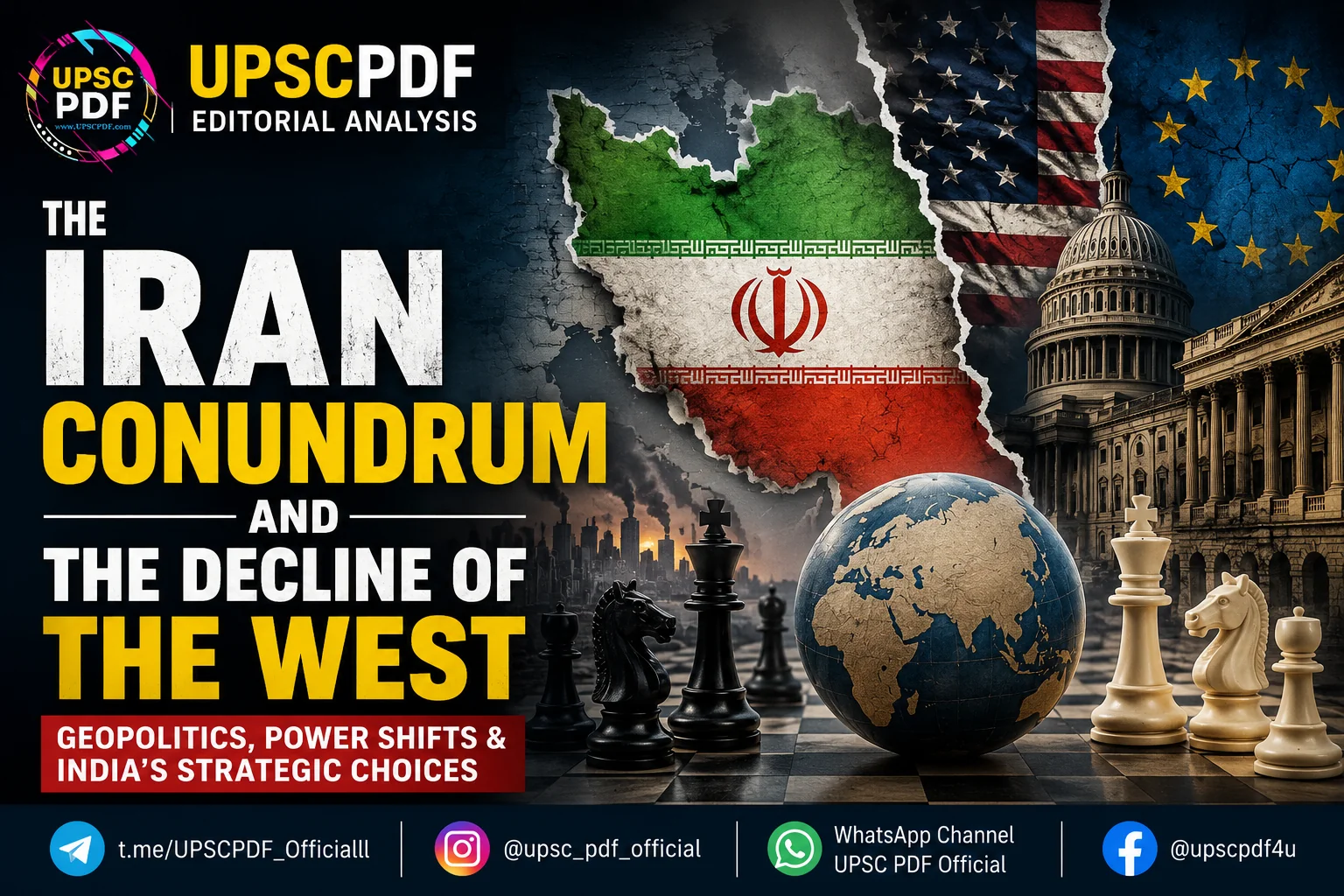
The 2026 U.S.–Iran framework, the reopening of the Strait of Hormuz and the limits of coercive power — decoding energy geopolitics, nuclear verification, multipolarity and India's strategic autonomy. After months of conflict that had effectively closed the Strait of Hormuz to Western-allied shipping, the United States and Iran signed a Memorandum of Understanding (MoU) on 17 June 2026. The framework provides for the reopening of the Strait to commercial vessels, phased sanctions relief, a large reconstruction package, and a window to negotiate a final settlement — with the hardest questions on Iran's nuclear programme deferred to that later stage. The editorial reads the deal as more than a ceasefire. Its argument is that despite sustained military pressure and sweeping sanctions, Washington could not impose a comprehensive settlement — a sign, it contends, of a relative decline in Western coercive dominance and the rise of a more transactional, multipolar order. Iran's leverag
⏱ Reading time: ~32 min