
AI, Deepfakes & Digital Rights | UPSC GS-2 | UPSCPDF
UPSCPDF Editorial Analysis: AI, deepfakes & constitutional guardrails for India — DPDP Act, IT Rules 2026, MCQs, Mains, Essay & Interview.
Key Takeaways | Quick Facts Box | From Datafication to Synthetic Media — A Timeline | Three Judgments to Anchor Your Answer | Constitutional & Legal Foundations | India's Digital Governance Architecture | The Comparative & International Frame | Marks Breakdown | Key Dimensions (Multi-GS) | Additional Essay Angles | Key Actors & Stakeholders | Quick Revision Tags | 📚 Explore More UPSC Editorial Analyses | 🇮🇳 UPSCPDF Editorial Analysis
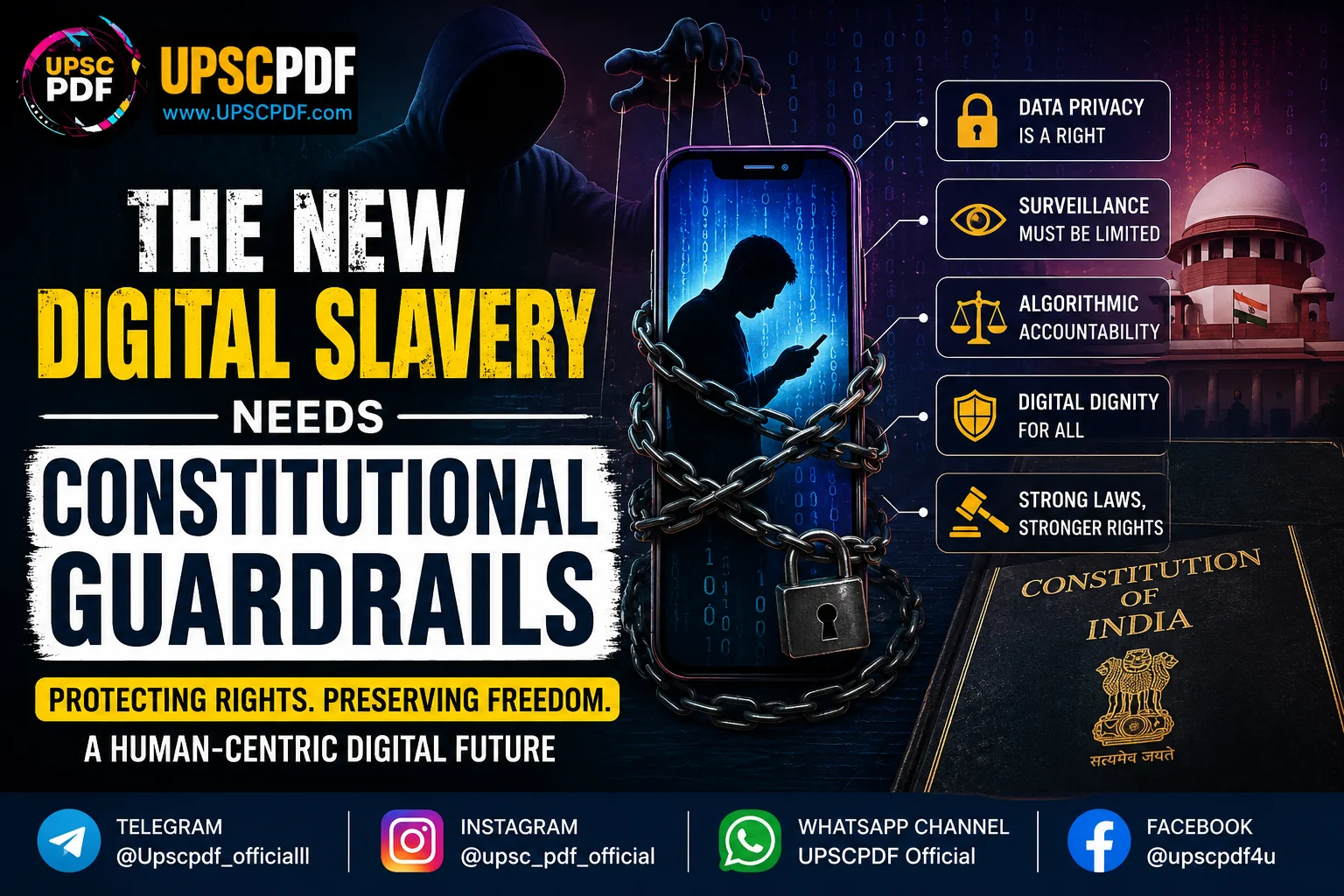
From "digital slavery" to digital dignity — examining AI-driven manipulation, deepfakes and platform power, and the case for a rights-based, accountable and constitutionally-anchored framework for India's information order. A widely discussed editorial by MP Dr Shashi Tharoor contends that rapid advances in AI and platform algorithms are reconfiguring information flows, personal autonomy and democratic contestation — to the point of an informational "slavery" in which citizens are governed by systems they neither see nor consent to. High-fidelity synthetic media (deepfakes) and engagement-optimising recommender systems, it argues, create structural harms: erosion of a shared factual foundation, algorithmic discrimination in critical services, and foreign and domestic information operations that polarise societies. Because traditional legislation is reactive and sectoral, the editorial holds that governance must instead be rights-based, democratically accountable, transparent and ul
⏱ Reading time: ~29 min