

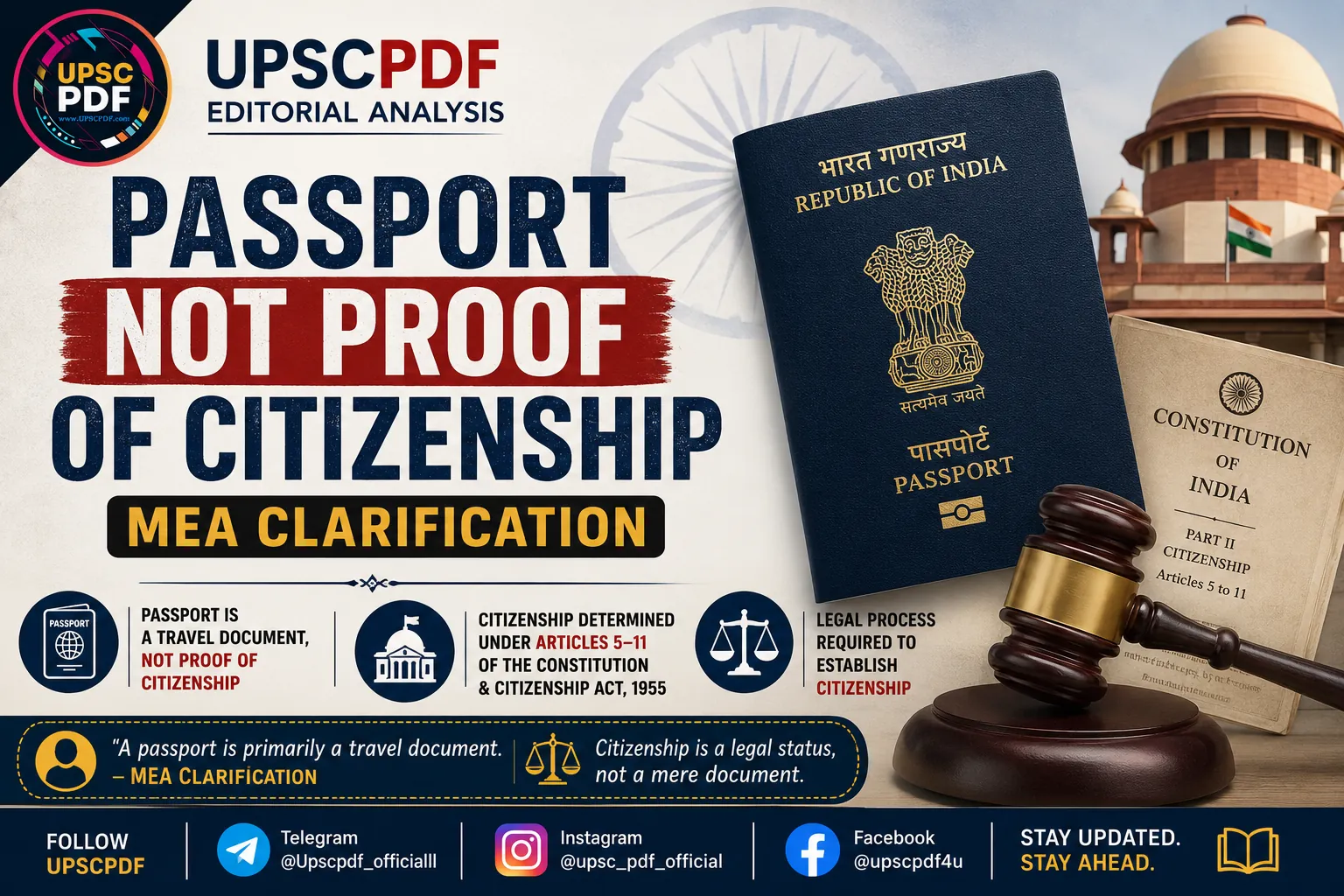
Passport is Not Proof of Citizenship | UPSC GS-2 | UPSCPDF
UPSCPDF Editorial Analysis: why a passport is a travel document, not proof of citizenship — Articles 5–11, Citizenship Act 1955, Section 20. UPSC GS-2.
Key Takeaways | Quick Facts Box | How the Legal Position Evolved | The Core Distinction — Status vs Evidence | Constitutional & Legal Foundations | The Legal & Documentation Architecture | The International Frame | Marks Breakdown | More Mains Angles (Multi-GS) | Additional Essay Angles | Key Actors & Stakeholders | Quick Revision Tags | 📚 Explore More UPSC Editorial Analyses | 🇮🇳 UPSCPDF Editorial Analysis
Why a passport is a travel document and not conclusive proof of nationality — decoding citizenship as a legal status under Articles 5–11 and the Citizenship Act, 1955, versus documents as mere evidence. On the 14th Passport Seva Divas (observed on 24 June to mark the enactment of the Passports Act, 1967), a senior Ministry of External Affairs (MEA) official clarified that an Indian passport is primarily a travel document and should not be construed as standalone proof of citizenship. Officials stressed that passports attest to the nationality of Indian citizens while abroad and are issued only after extensive verification by multiple agencies. The remark triggered intense public and political debate, since passports — and other state-issued IDs like Aadhaar and voter cards — are widely treated as authoritative. The Centre later asserted that this is not a new rule but a long-settled legal position, citing Section 20 of the Passports Act and judicial precedent (including a 2013
⏱ Reading time: ~31 min