

Anti-Defection Law & Speaker's Role | UPSC GS-2 | UPSCPDF
UPSCPDF guide to the Anti-Defection Law (Tenth Schedule) and the Speaker
💡 Key Takeaways | ⚖️ Two Perspectives — A Balanced View | 🏛️ Evolution of the Anti-Defection Framework | 🔍 Core Concepts Decoded | 📜 Constitutional Anchors | 👨⚖️ Landmark Judgments | 🏛️ Committees & Reform Proposals | 🔧 The Reform Menu — At a Glance | 📊 Marks Breakdown | 🧩 Key Dimensions | 📐 Additional Essay Angle Cards | 👥 Key Actors & Stakeholders | 🗂️ Quick Revision Tags | 🇮🇳 UPSCPDF Editorial Analysis
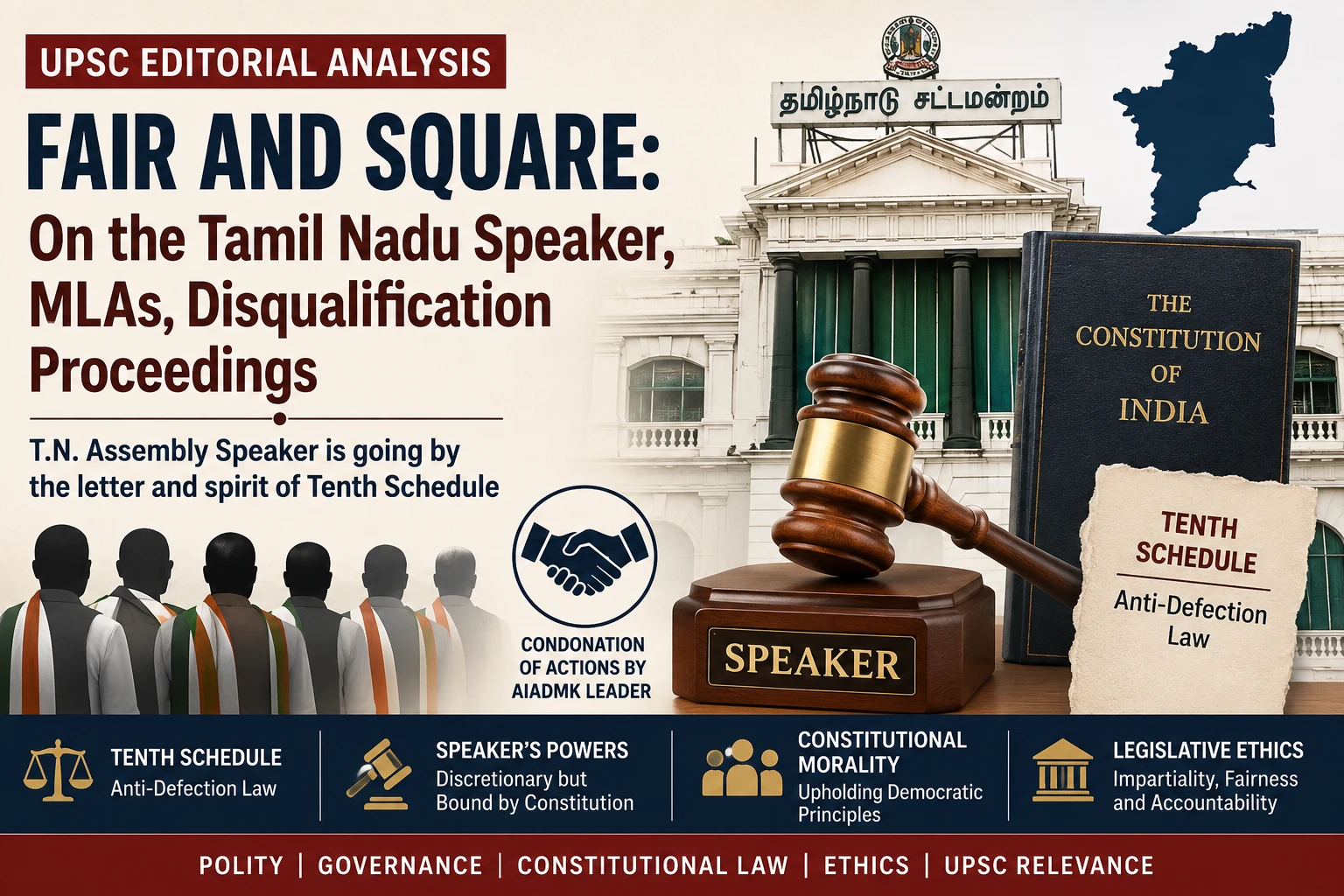
Decoding the Tenth Schedule, the condonation provision and the enduring debate on the Speaker's neutrality — through the 2026 Tamil Nadu disqualification proceedings India's Anti-Defection Law sits at the crossroads of party discipline and a legislator's conscience — and the Speaker who adjudicates it is both umpire and, often, a member of the ruling side. This UPSCPDF editorial analysis uses the 2026 Tamil Nadu disqualification case to unpack the Tenth Schedule, the key judgments, and the competing perspectives, in a balanced, exam-ready format. On 9 June 2026, the Tamil Nadu Assembly Speaker, J.C.D. Prabhakar, announced that he would not initiate disqualification proceedings against 21 rebel AIADMK MLAs who had supported the TVK-led government during the confidence vote on 13 May 2026 in violation of the AIADMK whip — after the party's General Secretary, Edappadi K. Palaniswami, withdrew the disqualification demand (a condonation of the whip violation). In the same announcement
⏱ Reading time: ~34 min