
Rajya Sabha Nomination Rejection | UPSC GS-2 | UPSCPDF
UPSCPDF guide to the Rajya Sabha nomination rejection row — Section 33A, Returning Officer powers, Article 329(b) & electoral integrity. MCQs, Mains & Essay.
💡 Key Takeaways | ⚖️ Two Perspectives — A Balanced View | 🏛️ How Rajya Sabha Elections Work | 🕘 How the Dispute Unfolded | 📜 Section 33A — The Disclosure Standard | ⚖️ Two Statutes, Two Roles — RPA 1950 vs. 1951 | 📊 Constitutional Anchors | 👨⚖️ Landmark Judgments | 🧭 Challenging a Rejection — The Article 329(b) Route | 📋 Committees & Reform | 📊 Marks Breakdown | 🧩 Multi-Dimensional Lens | 📐 Additional Essay Angle Cards | 👥 Key Actors & Stakeholders | 🗂️ Quick Revision Tags
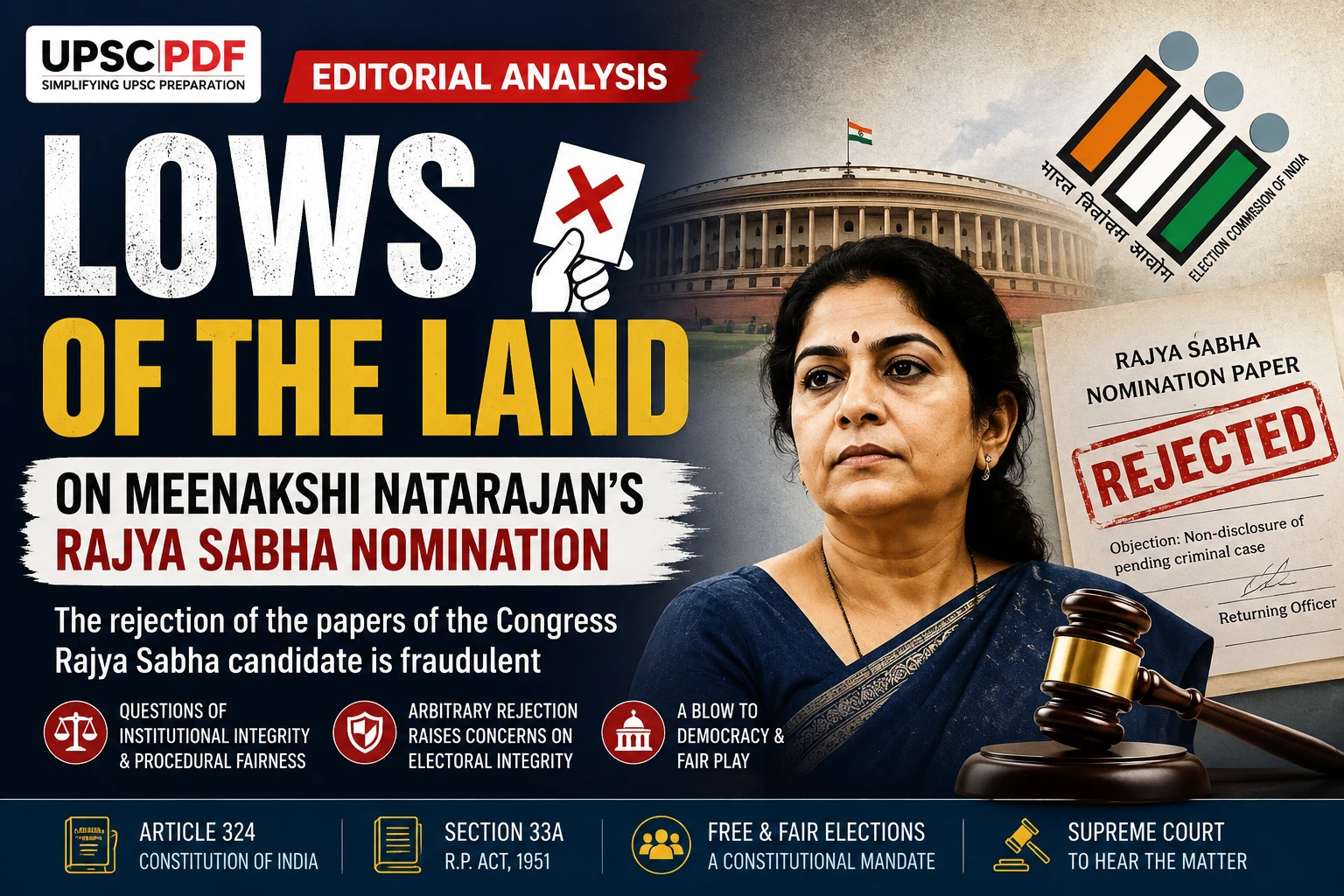
Returning Officer powers, Section 33A of the RPA, 1951, the Article 329(b) bar and the constitutional balance between electoral purity and procedural fairness Who gets to contest an election — and who decides? The rejection of an Opposition candidate's Rajya Sabha nomination from Madhya Pradesh has put the spotlight on the Returning Officer's scrutiny power, the precise disclosure threshold under Section 33A of the RPA, 1951, and the constitutional route for challenging such decisions. This UPSCPDF editorial analysis distils the law, the competing arguments and the exam angles into a balanced, ready-to-revise guide. The rejection of a Congress candidate's Rajya Sabha nomination from Madhya Pradesh has triggered a sharp debate on electoral integrity, procedural fairness and the powers of Returning Officers (ROs). The RO rejected the nomination on the ground that the candidate allegedly failed to disclose a criminal case; the candidate's position is that the matter was a private compla
⏱ Reading time: ~32 min