

India's Four Labour Codes | UPSC GS-2 & GS-3 | UPSCPDF
UPSCPDF guide to India
💡 Key Takeaways | ⚖️ Two Perspectives — A Balanced View | 🏛️ Evolution of India's Labour Law Framework | 🔍 The Four Codes Decoded | 📜 Constitutional & Doctrinal Foundations | ⚖️ Landmark Supreme Court Judgments | 🌍 International Context — The ILO & Comparative Models | 🏛️ Landmark Provisions of the New Codes | 🤝 Collective Bargaining & Compliance Architecture | 🛡️ Social Security & Worker Welfare Push | 🇮🇳 Supporting Government Initiatives | 📊 Marks Breakdown | 🧩 Key Dimensions | 📐 Additional Essay Angle Cards | 👥 Key Actors & Stakeholders
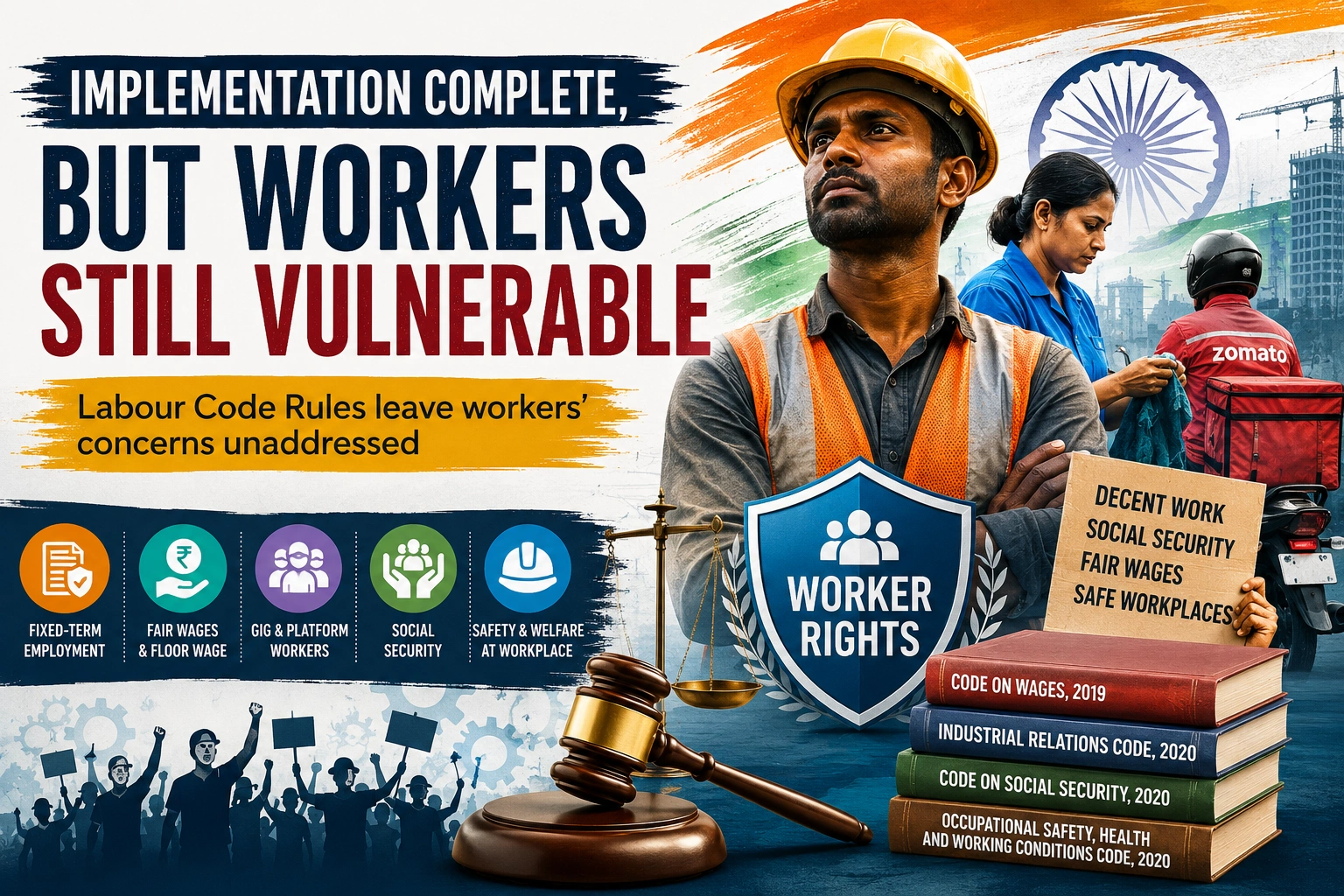
From 29 Laws to 4 Codes — Analysing Wages, Fixed-Term Employment, Gig & Platform Workers, Social Security and Collective Bargaining in the New Labour Architecture India's four Labour Codes consolidate 29 central labour laws into a single framework — reviving the long-running debate between labour-market flexibility and worker security. This UPSCPDF editorial analysis unpacks what has changed, the constitutional questions involved, and the competing perspectives, in a balanced, exam-ready format. On 21 November 2025, the Union Ministry of Labour and Employment brought the four Labour Codes into force through Official Gazette notifications, operationalising major provisions and subsuming 29 central labour laws into a single, modernised framework — described as among the most significant labour reforms since Independence. The rollout is phased and federal. The Codes are in force nationwide; draft Central Rules were pre-published on 30 December 2025, and the final Central Rules w
⏱ Reading time: ~38 min