

Industrial Safety in India | UPSC GS-2 GS-3 | UPSCPDF Editorial Analysis
UPSCPDF: Industrial Safety in India — OSHWC Code, Labour Laws, Article 42, Governance Failures. UPSC GS-2/GS-3 guide: MCQs, Mains, Essay, Interview prep.
💡 Key Takeaways | 📅 Historical Timeline | ⚠️ Industrial Safety in India: Key Challenges & Reforms | 📰 Recent Industrial Incidents — Current Affairs Context | ⚖️ Constitutional Framework | 🔍 Analytical Dimensions | 🌍 Global Best Practices | 📋 Legislative Framework | 💻 Digital & Welfare Initiatives | 📊 Marks Breakdown | 🧩 Key Dimensions | 👥 Key Actors | 🎯 30-Second Revision | 🗂️ Quick Revision Tags | 🔗 Related UPSCPDF Editorial Guides
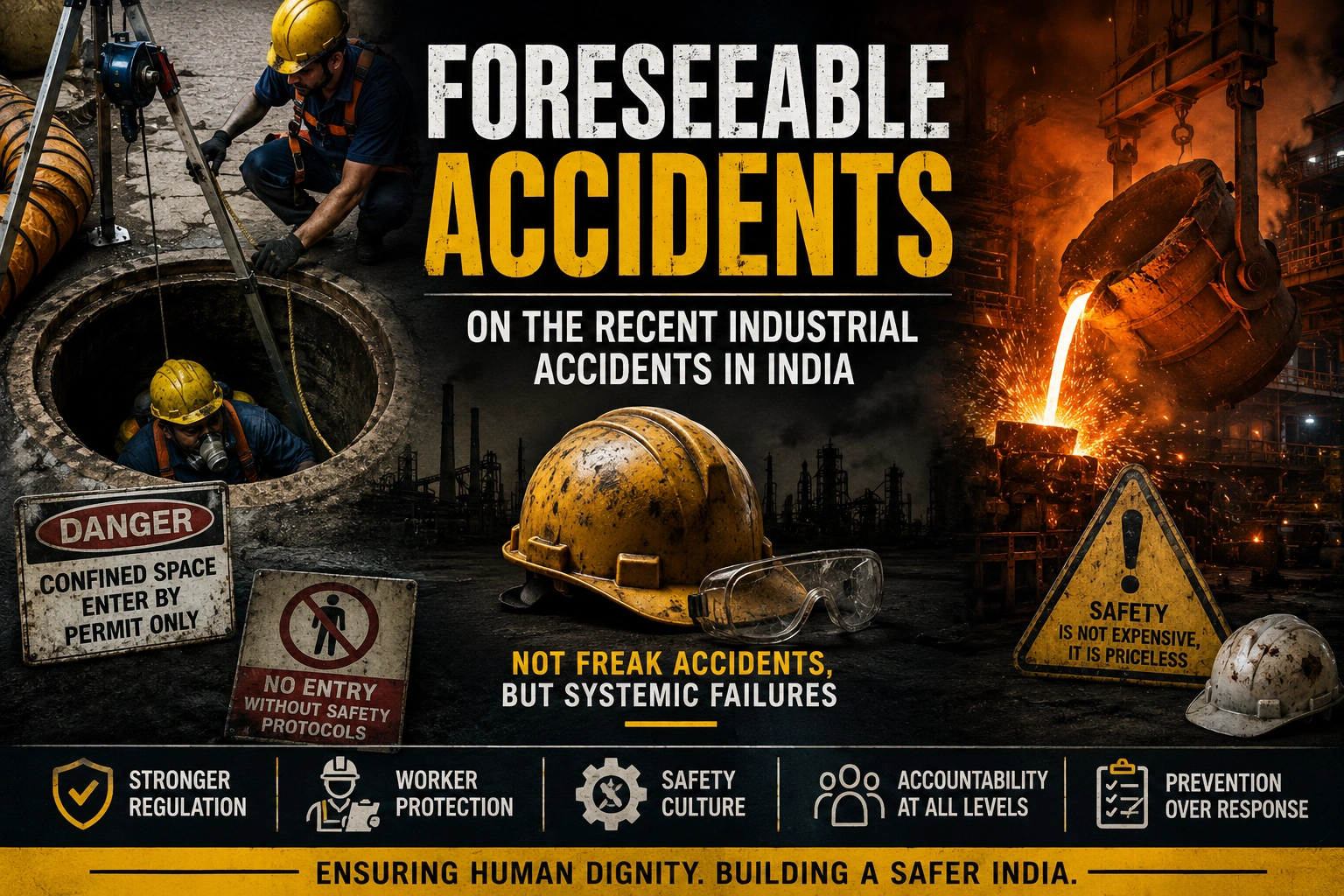
Occupational Safety, Contract Labour Vulnerability, Governance Failures & the Constitutional Imperative of Safe Workplaces Recent industrial accidents in Surat (multiple deaths from toxic gas in a septic tank) and Visakhapatnam (steel plant explosion) highlight persistent occupational safety failures. Despite differing contexts, both reveal identical systemic failures: absent confined-space safety protocols, untrained contract workers, poor maintenance, and weak enforcement of occupational safety standards. These are not isolated events. India's industrial growth has long been accompanied by recurring workplace fatalities that are, in most cases, entirely preventable. The Bhopal Gas Tragedy (1984) was a watershed moment — yet four decades later, systemic conditions enabling workplace disasters remain inadequately reformed. UPSC Relevance: This spans GS-2 (governance, labour welfare, Articles 21/42), GS-3 (industrial development, disaster management, technology), and GS-4 (corporate e
⏱ Reading time: ~27 min